NC车床零件
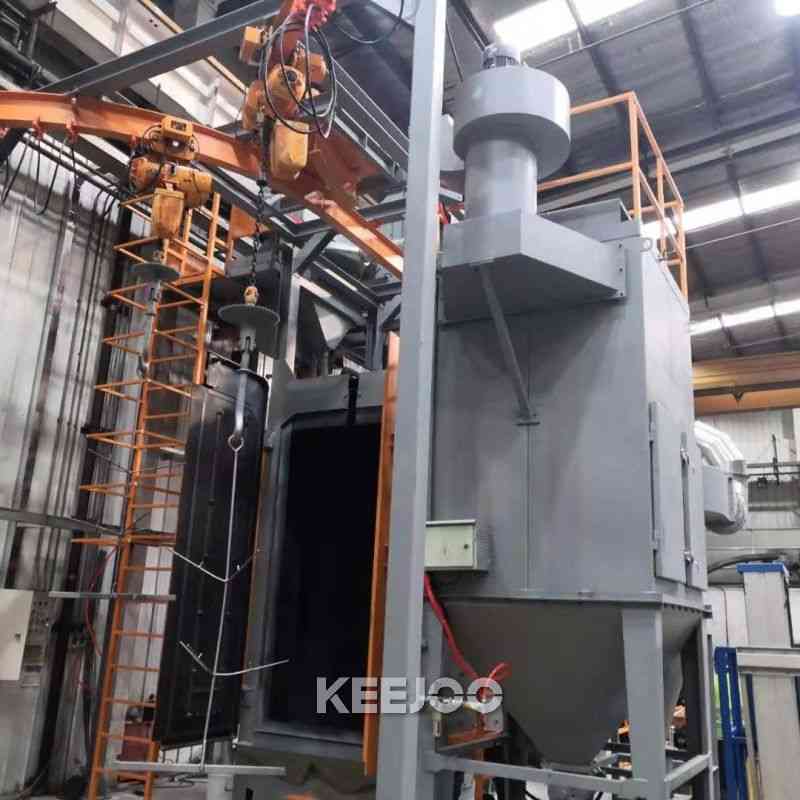

Reducing shot loss in shot blasting machines requires a comprehensive approach, encompassing equipment parameter optimization, consumable management, daily maintenance, and operational procedures. The following are systematic recommendations based on the latest industry practices:
Core Optimization Strategies
Precise Equipment Parameter Control
Shot Blasting Angle: Adjusting the angle between the shot blaster and the workpiece surface to 75°–85° (nearly perpendicular) significantly reduces shot bounce and ineffective collisions, improving energy utilization. For complex workpieces, it is recommended to use a multi-angle shot blaster combination to cover dead angles.
Shot Blasting Machine Speed: Dynamically adjust the speed according to the workpiece material. For carbon steel workpieces, it is recommended to control the speed at 2800–3200 r/min, while for soft materials such as aluminum alloys, it is recommended to reduce it to 2500–2800 r/min to avoid excessive shot dispersion or breakage due to excessive speed.
Shot Flow Rate: Install a flow regulating valve to precisely supply shot according to the workpiece surface area (150–200 grams of steel shot per square meter is recommended) to avoid overfeeding. For small workpieces, the flow rate can be reduced by 20%–30%.
Scientific Management of Steel Shot Consumables
Timely Screening and Replenishment: When the steel shot particle size is less than 0.8mm, new shot should be added promptly; otherwise, the projectile force will be dispersed, and the cleaning efficiency will decrease. It is recommended to perform a thorough screening once a week to remove broken shot and dust.
Rational Mixing and Use: When mixing new and old steel shot, the proportion of old shot should not exceed 40% to ensure cleaning effect and equipment safety.
Material Compatibility: Select the type of steel shot according to the workpiece material. G40 grade steel shot (HRC45–55) can be used for castings. Special stainless steel shot or copper shot should be used for aluminum alloys or stainless steel parts to avoid workpiece damage or premature breakage of the steel shot due to excessive hardness.
Strengthen Equipment Maintenance and Sealing
Regular Inspection of Wear Parts: Inspect the shot blasting machine impeller blades weekly; replace them immediately if the thickness is less than 15mm. Perform dynamic balancing tests monthly to prevent high-speed rotation imbalance that could lead to increased equipment vibration and energy consumption.
Sealing and Leak Prevention: replace the shot blasting machine's sealing plates promptly. Check for shot leakage in the shot delivery pipe, shot blasting chamber, and other parts to prevent steel shot loss during recovery.
Dust Collection System Maintenance: Clean the filter bags daily and backflush them with compressed air every two weeks to prevent dust blockage from affecting heat dissipation (temperatures exceeding 70℃ will shorten motor life).
Optimize the Recovery and Circulation System
Install a screw conveyor and a secondary screening device to effectively separate recovered steel shot from dust and broken shot, increasing the shot recovery rate from 85% to over 95%.
Add a settling chamber to the bottom of the shot blasting chamber to reduce losses caused by steel shot being drawn into the dust collection system with the airflow. Establish Data-Driven Management and Operational Standards
Establish a steel shot consumption ledger, recording daily replenishment amounts and the number of workpieces processed. Calculate the shot consumption per workpiece (kg/piece), set a threshold (e.g., 0.5 kg/piece), and automatically trigger an investigation process when the threshold is exceeded.
For continuously operating casting production lines, it is recommended to replenish 5%–8% of the steel shot every 4 hours. For intermittent operations, if the machine is shut down for more than 8 hours, the water accumulated in the shot silo must be cleaned to prevent corrosion.
For high-precision processes such as surface strengthening and stainless steel parts cleaning, it is recommended to use brand-new steel shot and establish a single-piece tracking file, strictly controlling the number of reuses.