NC车床零件
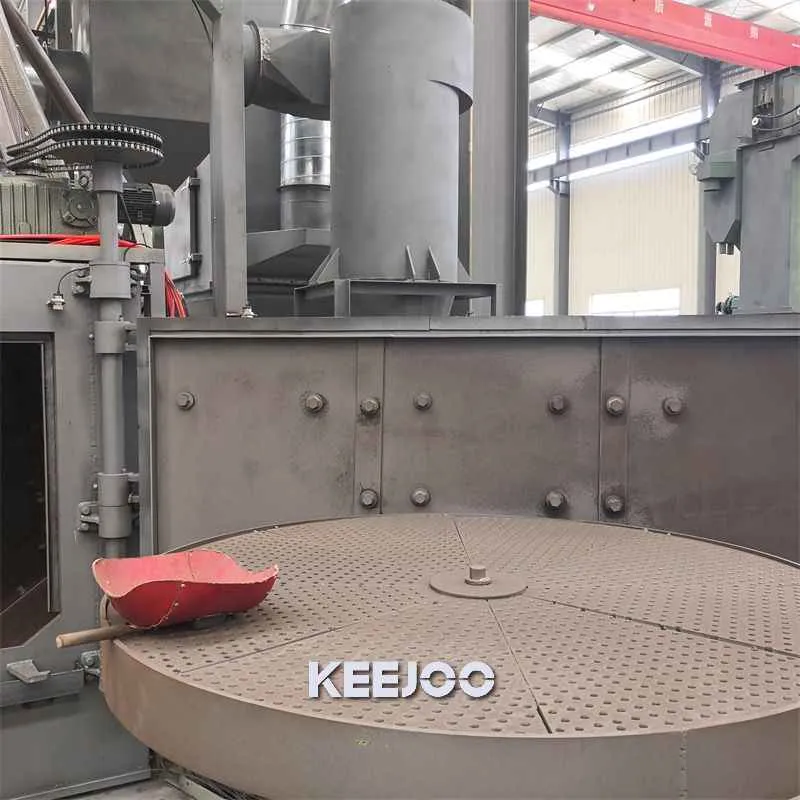
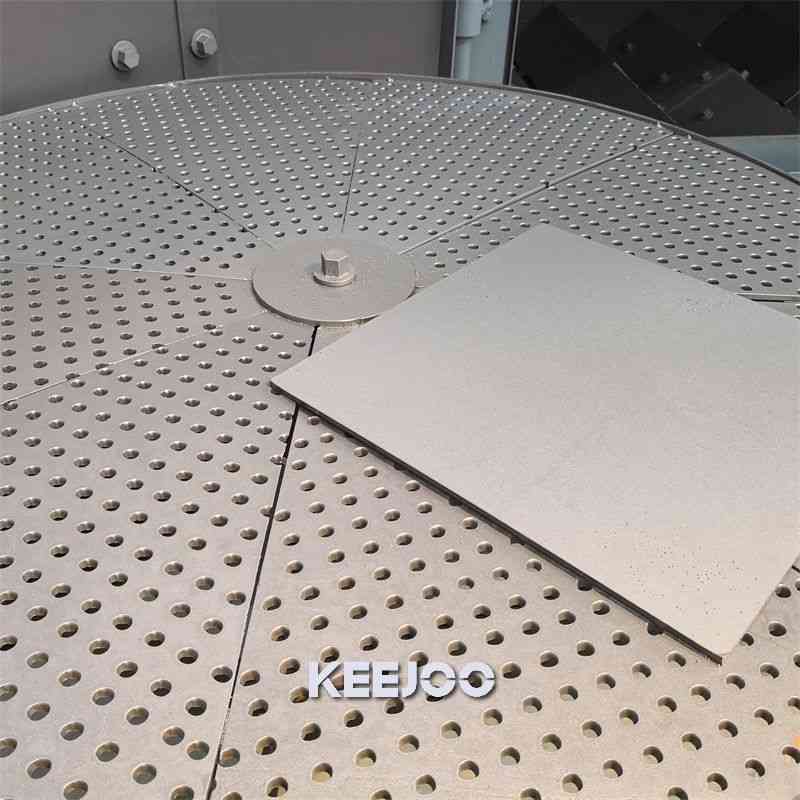
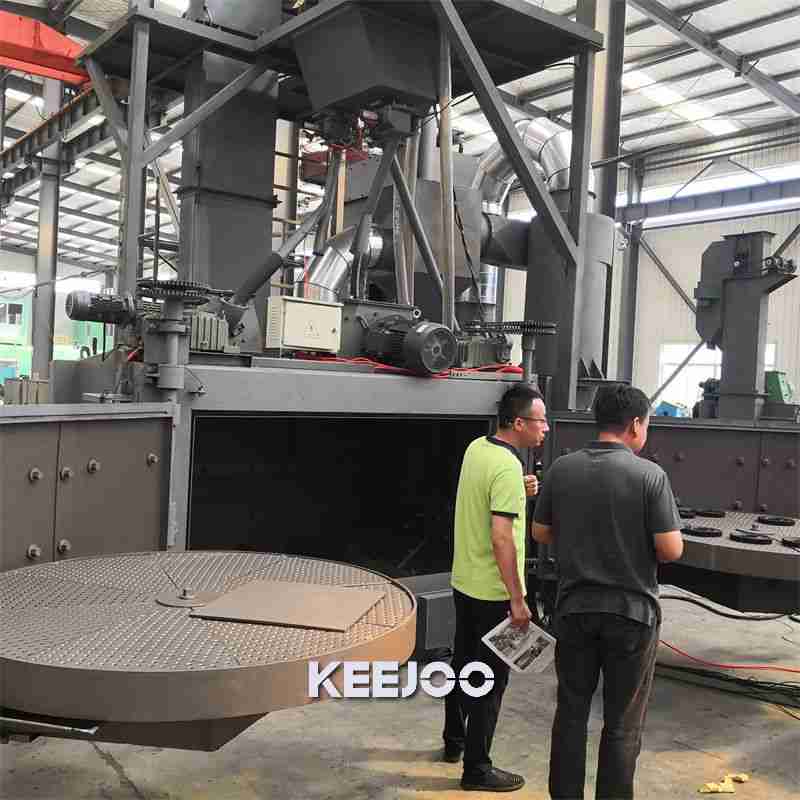
The core principles of using a rotary table shot blasting machine are safety first, standardized operation, balanced load, and continuous monitoring. Strictly adhering to the four key aspects of pre-start inspection, standardized operation, shutdown maintenance, and safety protection can effectively ensure equipment lifespan, workpiece quality, and personnel safety.
I. Pre-start Inspection (Core: Eliminating Hidden Dangers)
Safety Protection and Interlocks
Check the protective doors, safety interlocks, and emergency stop buttons to ensure they are sensitive, reliable, and tightly closed.
Check the rubber door curtain and sealing strips of the chamber for damage or curling to prevent shot blasting.
Clean up shot and debris around the equipment to ensure unobstructed passage.
Equipment Structure and Wear Parts
Check the rotary table locks, transmission, bearings, and gears for looseness, abnormal noise, and insufficient lubrication.
Check the shot blaster blades, guard plates, and directional sleeves for cracks and excessive wear; blades should be replaced symmetrically to avoid imbalance.
Check the tension and misalignment of the elevator belt and adjust the tension bolts.
**Projectile and Circulation System:**
Confirm that the projectile specifications, cleanliness, and quantity meet the process requirements; the projectile must be sieved to ensure it is free of impurities and clumps.
Clean the separator, screen, and screw conveyor to prevent blockage.
**Dust Removal and Electrical System:**
Inspect the dust collector, filter bags, and ventilation to ensure they are unobstructed and prevent dust accumulation.
Check the power supply, wiring, and insulation for damage and leakage.
**Workpiece and Tooling:** Workpieces should be free of core reinforcement, burrs, and be neither too large nor too heavy to avoid damaging the equipment.
Tooling and fixtures should be intact and reliably fixed.
**II. Workpiece Loading and Parameter Settings (Core: Balance, Matching)**
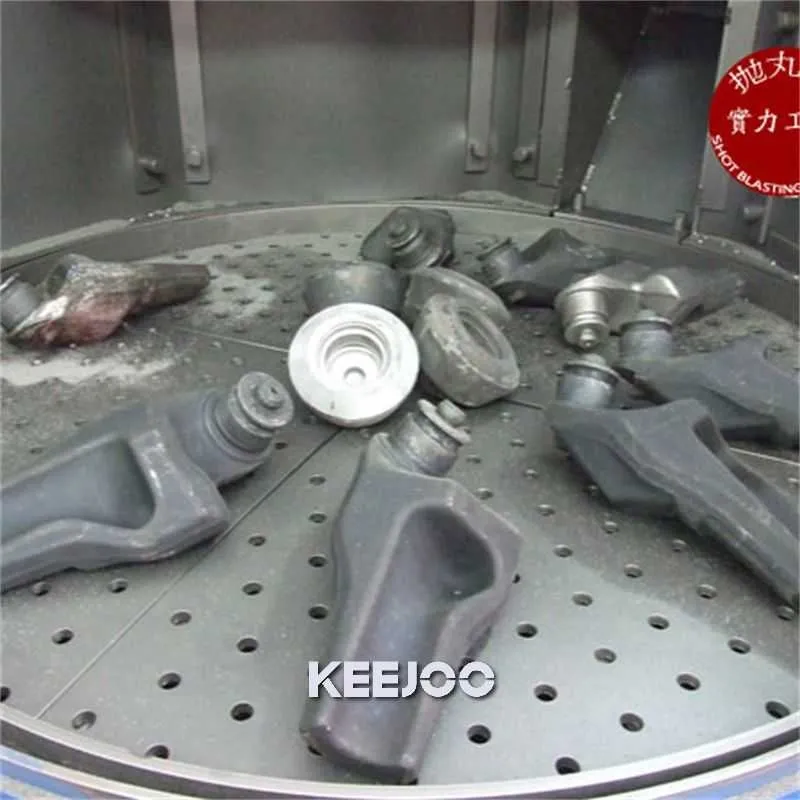
**Loading Principles:** Workpieces should be evenly distributed and symmetrically placed. Uneven loading and overloading are strictly prohibited to prevent turntable imbalance and vibration.
Leave gaps between workpieces to ensure uniform projectile circulation and cleaning.
Reduce the projectile velocity for thin-walled and easily deformable parts; appropriately increase the projectile flow rate for thick parts.
Parameter Matching
Select shot according to workpiece material: stainless steel shot for stainless steel parts, aluminum shot/glass beads for aluminum parts.
Adjust shot blasting machine angle, directional sleeve, shot flow rate, and turntable speed to ensure coverage and effectiveness.
III. Start-up and Operation Monitoring (Core: Sequence, Status)
Standard Start-up Sequence
First start the dust removal system → then start the elevator and separator → start the turntable → finally start the shot blasting machine.
Key Points for Operation Monitoring
Listen to sound: No abnormal noise or unusual sounds from the shot blasting machine, turntable, or transmission.
Observe instruments: Current and pressure are stable, without significant fluctuations.
Check circulation: Shot delivery is smooth, without blockages or idling.
Observe effect: Workpieces are cleaned evenly, without missed areas or over-blasting.
Strictly Prohibited: Opening doors, reaching inside, adjusting parameters, or stepping over equipment during operation.
IV. Shutdown and Maintenance (Core: Sequence, Thoroughness)
Standard Shutdown Sequence:
First, close the shot blasting machine's feed valve → Stop the shot blasting machine → Stop the turntable → Stop the elevator and separator → Finally, shut down the dust collection system (wait for dust to be completely discharged).
The door can only be opened to retrieve parts after the turntable and shot blasting machine have completely stopped.
Daily Maintenance: Clean up any loose shot and dust each shift, and reuse them after sieving.
Regularly inspect vulnerable parts (blades, guard plates, directional sleeves, belts) and replace them promptly.
Lubricate bearings, gears, and transmission components as required.
Regularly clean the dust collector filter bags and separator to ensure efficiency.
V. Safety Protection (Core: Personal and Environmental Protection)
Personal Protection: Must wear: safety helmet, goggles, dust mask, earplugs, abrasion-resistant work clothes, safety shoes, and protective gloves.
Prohibited: Touching rotating parts while wearing gloves; long hair and exposed loose clothing.
Environment and Fire Prevention
Smoking and open flames are strictly prohibited in the work area. Fire extinguishers must be provided.
Regularly clean dust inside and outside equipment and in drainage ditches to prevent dust explosions.
Emergency Handling
Abnormalities (unusual noises, severe vibrations, smoke, material jamming) → Immediately press emergency stop, disconnect power, troubleshoot and repair before restarting.
Maintenance must be performed with power off, clearly marked, and under the supervision of a designated person. Live work is strictly prohibited.
VI. Common Problems and Solutions
Uneven cleaning: Workpiece placement, shot blasting machine angle, directional sleeve, shot flow rate issues → Adjust parameters, rearrange.
Abnormal vibration: Turntable unbalanced load, blade wear/asymmetry, bearing damage → Stop machine for inspection, balance, replace.
Shot blockage: Screen blockage, conveyor jamming, shot clumping → Stop machine for cleaning, sieve the shot.
Decreased efficiency: Shot wear, separator failure, shot leakage from the guard plate → replace shot, clean the separator, repair the guard plate.